
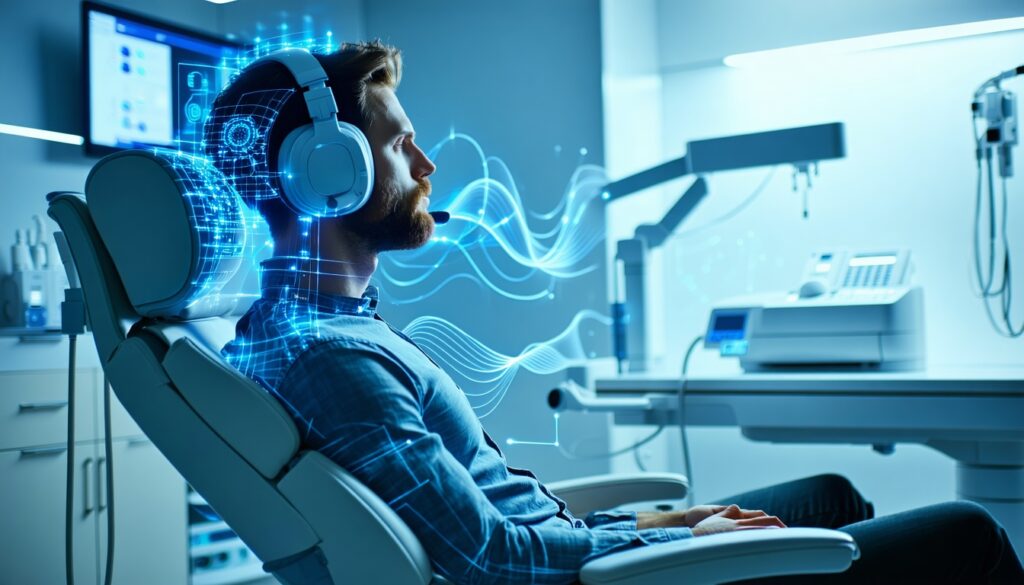
Benefits of TMS Services
Transcranial Magnetic Stimulation (TMS) therapy represents a significant advancement in the treatment of depression, particularly for individuals whose symptoms have not improved with traditional medication. Understanding the benefits of TMS services can help you and your loved ones make informed decisions about mental health treatment.
FDA Approval for Major Depression
TMS therapy is a neuromodulation technique that has received approval from the US Food and Drug Administration (FDA) specifically for treating major depressive disorder (MDD) in patients who are resistant to medications. This endorsement underscores the therapy’s credibility and effectiveness as an alternative treatment option for individuals seeking relief from depression without relying on drugs.
| Approval Details | Information |
|---|---|
| FDA Approval Year | 2008 |
| Indications | Major Depressive Disorder (MDD), Treatment-Resistant Depression, OCD, Migraines, Anxiety with Depression, Smoking Dependence |
| Treatment Sessions | Daily for 4 to 6 weeks |
For those struggling with treatment-resistant depression, TMS offers a viable alternative that can lead to significant improvement in mood and well-being.
Response and Remission Rates
The response rates to TMS for major depression are notably high, ranging from 50% to 55%. Many patients report a substantial reduction in depressive symptoms after undergoing TMS therapy. Additionally, remission rates, which reflect the percentage of individuals whose symptoms have sufficiently decreased, range between 30% and 35%.
| Outcome Measure | Response Rate | Remission Rate |
|---|---|---|
| Major Depression | 50% – 55% | 30% – 35% |
Clinical studies highlight that high-frequency stimulation of the left dorsolateral prefrontal cortex (DLPFC) can effectively alleviate depressive symptoms, while low-frequency stimulation on the right DLPFC can help manage symptoms of anxiety and depression. This tailored approach reinforces TMS therapy’s adaptability to individual needs.
MindHealth MD is committed to providing comprehensive TMS services that address not just the symptoms of depression but also the underlying factors contributing to mental health challenges. To learn more about how TMS works and whether it might be right for you, visit our page on how does TMS therapy work and explore options like TMS for treatment-resistant depression.
Understanding TMS Therapy
Transcranial Magnetic Stimulation (TMS) therapy offers innovative treatment options for individuals struggling with depression. This section discusses how TMS works by stimulating specific brain regions and its effectiveness in alleviating depressive symptoms.
Stimulation of Brain Regions
TMS therapy uses magnetic fields to stimulate nerve cells in the brain. Specifically, high-frequency stimulation targets the left dorsolateral prefrontal cortex (DLPFC), which has been shown to alleviate symptoms of depression. Conversely, low-frequency stimulation of the right DLPFC can help relieve symptoms associated with both depression and anxiety.
Processing this targeted stimulation can lead to changes in brain activity patterns, which may have a positive effect on mood and emotional regulation. The advantage of TMS is that it is non-invasive, allowing you to undergo treatment without the need for medication or surgical procedures, making it an appealing option for many individuals.
Efficacy in Treating Depression
Research has shown that TMS can effectively help individuals experiencing treatment-resistant depression. The FDA approved repetitive transcranial magnetic stimulation (rTMS) in 2008 specifically for patients who did not respond to at least one antidepressant during their current depressive episode [2]. Many recent Randomized Controlled Trials (RCTs) assessing rTMS for treating depression have indicated improvements in depression scores compared to sham treatments, although there are limitations in terms of long-term benefits and evidence availability [3].
The effectiveness of TMS varies among individuals, but if symptoms improve during treatment and later return, additional cycles of TMS can often be covered by insurance [4]. Safety studies have also confirmed that TMS does not adversely affect cognitive functions, ensuring that your mental faculties remain intact following treatment [5].
TMS therapy represents a promising alternative for those seeking a drug-free and non-invasive approach to managing depression. For more insights on TMS and its applications in treating various conditions such as OCD, bipolar depression, and PTSD, consider exploring the interconnected services offered at MindHealth MD.
Applications of TMS
TMS (Transcranial Magnetic Stimulation) therapy has gained significant traction as a non-invasive treatment option for various mental health conditions. It offers hope for individuals who struggle with depression and other related disorders, particularly those who have not found relief through traditional methods.
Treatment-resistant Conditions
One of the most compelling applications of TMS is its effectiveness in treating treatment-resistant depression, defined as depression that does not respond to at least one antidepressant. In 2008, the FDA cleared repetitive transcranial magnetic stimulation (rTMS) specifically for this purpose. Traditional TMS shows promising outcomes, with about 50% of patients experiencing symptom improvement and over 30% achieving remission.
Recent developments have further enhanced its efficacy. The accelerated fMRI-guided theta burst protocols allow for rapid treatment, achieving remission in approximately 90% of patients who previously did not respond to conventional TMS, often in just three to five days.
Beyond depression, rTMS is FDA-cleared for several treatment-resistant conditions, including:
| Condition | FDA Clearance Year |
|---|---|
| Major Depressive Disorder | 2008 |
| Obsessive-Compulsive Disorder | 2018 |
| Bipolar Depression | 2020 |
| Adjunctive Treatment for Adolescents | 2024 |
| Smoking Dependence | Can be treated |
| Migraines | Can be treated |
| Anxiety with Depression | Can be treated |
This extensive range of applications highlights TMS as a versatile treatment approach capable of addressing multiple mental health challenges.
Expanded FDA Clearances
The landscape of TMS therapy is continually evolving, with ongoing research leading to expanded FDA clearances for various conditions. Recent advancements have included approvals for the treatment of severe OCD (2018), as well as a breakthrough device designation for bipolar depression (2020), indicating preliminary evidence of TMS’s effectiveness compared to other treatments.
As of March 2024, rTMS has also been cleared for adjunctive treatment of depression in adolescents aged 15 and older. This expansion underscores the growing recognition of TMS as a safe and effective treatment option that can help a broader demographic, including younger patients who may face challenges in managing their mental health.
For those considering innovative therapies, TMS stands out as a suitable solution for magnetic brain stimulation for depression. It is a promising alternative to conventional treatment approaches, and you can explore more about TMS offerings at MindHealth MD and see if this therapy is the right fit for you.
Safety and Side Effects
Understanding the safety and potential side effects of magnetic brain stimulation for depression is vital in making an informed decision about this treatment option. While TMS is generally considered safe, like any medical treatment, there are factors to consider.
Rare Side Effects
TMS is a non-invasive procedure with a low incidence of side effects. Most patients tolerate the treatment well. However, there are some rare side effects that you should be aware of:
| Side Effect | Occurrence Rate |
|---|---|
| Scalp discomfort | Common but temporary |
| Scalp burn | 1.2% of patients* |
| Seizures | Extremely rare |
| Headaches | Mild and usually transient |
*Scalp burn has been associated with specific shield usage, but not with all TMS applications [5]. The cognitive safety of TMS has been confirmed through various studies, demonstrating no lasting adverse effects on cognitive functions [5].
Comparison with Other Therapies
When comparing TMS to traditional treatments like antidepressants, TMS has several advantages. For instance, many individuals may notice improvements soon after starting TMS sessions, whereas medication may take weeks to have an effect.
| Feature | TMS | Antidepressant Medications |
|---|---|---|
| Invasiveness | Non-invasive | Invasive (pills, injections) |
| Recovery Time | None required | Varies |
| Speed of Response | Rapid (days) | Slower (weeks) |
| Side Effects | Minimal | Varies (common side effects) |
| Cognitive Impact | No lasting effects | Varies |
Patients experiencing treatment-resistant depression may find relief with TMS, achieving remission rates over 30% with traditional methods. New accelerated protocols have increased this to 90% for patients not responding to standard TMS [6].
In summary, TMS presents a compelling option for those seeking a safe, effective alternative to conventional treatments. If you or a loved one are exploring the benefits of TMS, consider taking the next step by learning more about it through transcranial magnetic stimulation therapy or scheduling a first time TMS consultation.
Considerations for TMS Treatment
When considering magnetic brain stimulation for depression, understanding the treatment sessions and the necessary post-treatment care is essential for a successful outcome.
Treatment Sessions
The process of repetitive TMS for depression typically involves a series of treatment sessions. For most patients, this means attending daily sessions five times a week for a duration of 4 to 6 weeks. During these sessions, adjustments may be made to the level of stimulation to minimize any side effects. Treatment effectiveness can vary, and you may start to see improvements in symptoms after a few weeks, requiring patience as the brain responds to the therapy [4].
| Session Frequency | Duration | Total Weeks |
|---|---|---|
| 5 sessions/week | 4 to 6 weeks | 20 to 30 sessions |
After completing the initial treatment series, ongoing standard care, like medication and talk therapy, may still be recommended. If you experience an improvement lasting for 2 to 3 months and then your symptoms return, repeat TMS treatment can be an option, often covered by insurance.
Post-Treatment Care
After completing your series of TMS sessions, it’s important to engage in proper post-treatment care. Though TMS is a non-invasive therapy, some ongoing support may still be necessary. This can include regular follow-ups with your psychiatrist and possibly continuing medication or therapy to maintain mental health stability.
If you notice any return of depression symptoms after treatment, consult your healthcare provider. They can determine whether further TMS sessions are appropriate and beneficial. Ensuring continuous communication with a TMS treatment center or TMS therapy provider is vital for consistent care and support.
By being aware of the treatment schedule and taking the necessary steps for post-treatment care, you can optimize your experience with magnetic brain stimulation for depression, improving your overall mental well-being.
Continual Improvement in TMS
Ongoing Research Efforts
The field of Magnetic Brain Stimulation for depression continues to evolve, with numerous clinical trials and studies being conducted to assess the efficacy and safety of Transcranial Magnetic Stimulation (TMS). Recent randomized controlled trials (RCTs) show varied outcomes, indicating improvements in depressive symptoms with remission rates ranging between 30% to 40% for many cases, along with sustained benefits [1]. Despite positive findings, discrepancies in study designs and outcomes highlight the need for more rigorous and well-structured trials.
Ongoing research aims to address the limitations seen in past studies, focusing on refining stimulation parameters and population characteristics. The effectiveness of TMS is being examined in treating conditions beyond major depression, including TMS for PTSD, TMS for bipolar depression, and the exploration of TMS as a potential solution for treatment-resistant depression [7]. As understanding of the brain’s response to TMS deepens, the potential applications of this therapy expand.
Potential Future Developments
The future of TMS therapy looks promising, with potential developments on the horizon. Evidence-based guidelines for the use of TMS in treating conditions like Post-Traumatic Stress Disorder (PTSD) and anxiety are evolving, though the evidence remains mixed. As research progresses, you may see enhanced protocols for TMS that increase its effectiveness and broaden its applicability.
Further advancements in technology could lead to more targeted stimulation methods, optimizing outcomes for a broader range of patients. Enhancements might include individualized treatment plans based on genetic or neurobiological profiles, which could change the landscape of depression treatment.
Innovative research could also unveil combined treatments that use TMS alongside other therapeutic modalities, such as cognitive-behavioral therapy or new pharmacological interventions, leading to a more comprehensive approach to mental health care. As TMS technology evolves in adaptability and precision, you or a loved one may find new hope in effectively managing depressive symptoms with this promising, non-invasive approach. For more information on this transformative therapy, visit our page on transcranial magnetic stimulation therapy.
References
- (NCBI)
- (NIMH)
- (NCBI)
- (Mayo Clinic)
- (NIH)
- (Cognitive FX USA)
- (TMS for treatment resistant depression)