
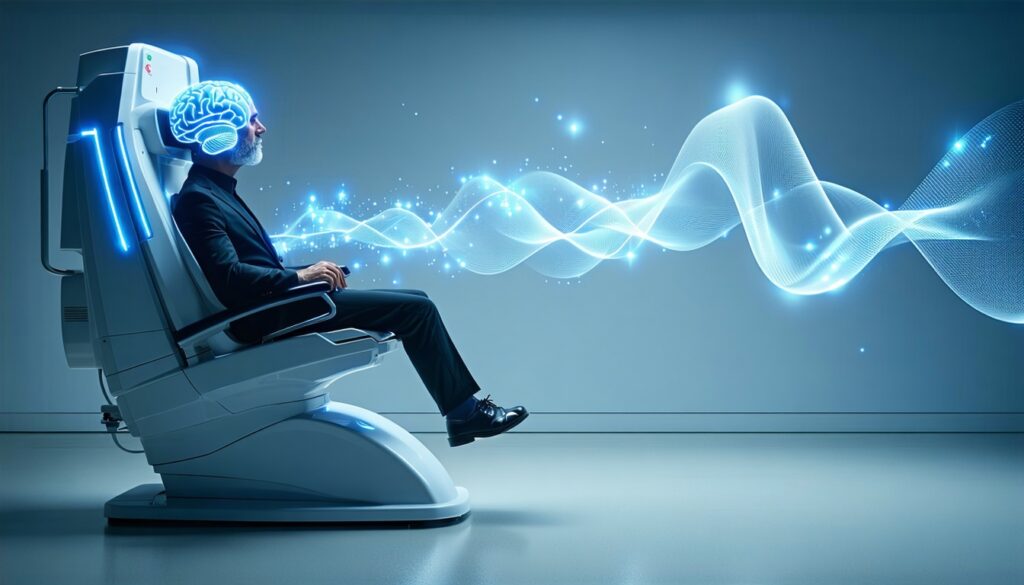
Understanding TMS Therapy
Transcranial Magnetic Stimulation (TMS) therapy offers a revolutionary approach for those struggling with major depression and other mental health conditions. It is an advanced, non-invasive treatment that harnesses the power of magnetic fields.
Basics of TMS Therapy
TMS therapy is designed to stimulate nerve cells in the brain, aiming to improve your mental health symptoms. Approved by the U.S. Food and Drug Administration (FDA), this therapy is typically employed when traditional treatments such as medication or psychotherapy have not brought relief. TMS is particularly effective for conditions like depression, OCD, PTSD [3], and bipolar depression.
| Key Features of TMS Therapy | Details |
|---|---|
| Non-invasive | No surgical procedure required |
| FDA-approved | Widely validated safety and efficacy for mental health conditions |
| Effective for treatment-resistant cases | Offers hope for those who haven’t responded to traditional treatments |
How TMS Works in the Brain
TMS therapy utilizes magnetic fields to stimulate specific areas of the brain associated with mood regulation. The procedure generates electromagnetic pulses that penetrate the skull, targeting nerve cells involved in mood control. Although the exact biology behind its effectiveness remains under investigation, studies indicate TMS can alter brain function, potentially easing symptoms of depression and improving overall mood.
The therapy can be particularly beneficial for individuals seeking a drug-free depression treatment or looking for an alternative to antidepressants. Additionally, advancements in TMS, like the accelerated form of Repetitive Transcranial Magnetic Stimulation (rTMS), have emerged to expedite treatment sessions while maintaining effectiveness.
Understanding how TMS functions in the brain can empower you in making informed decisions regarding your mental health treatment options. For personalized guidance, consider visiting a tms treatment center to discuss if this therapy is right for you.
Benefits of TMS Therapy
TMS therapy is becoming increasingly recognized as an effective treatment option for those struggling with various mood disorders. Understanding both the effectiveness and the duration of benefits can provide crucial insight into why you or a loved one should consider this innovative approach.
Effectiveness of TMS
TMS therapy has shown significant effectiveness for individuals with depression, especially those who have not responded well to traditional medication. Approximately 50% to 60% of individuals with treatment-resistant depression achieve a clinically meaningful response with TMS, and about one-third experience full remission where symptoms disappear completely.
Studies indicate that a course of at least 30 sessions of rTMS can enhance treatment outcomes. More specifically, higher frequency (HF) and lower frequency (LF) protocols have shown a statistically significant benefit from prolonged treatment, underscoring the relationship between the number of sessions and improved results [7]. Below is a summary of the optimal treatment parameters:
| TMS Treatment Choice | Recommended Pulses per Session | Recommended Total Pulses | Total Sessions |
|---|---|---|---|
| High-Frequency (HF) | 1200–1500 | 15,000–22,500 | ≥30 |
| Low-Frequency (LF) | 360–450 | 10,800–12,000 | ≥30 |
Duration of TMS Benefits
The effects of TMS therapy are not permanent; however, many patients report feeling better for several months after completing their treatment. The average duration of response typically extends slightly over a year. Patients often experience improved mood, decreased anxiety, and overall better mental well-being.
Continuing with TMS sessions, in addition to follow-up care, can maximize these long-term benefits and help maintain mental health improvements. If you’re interested in exploring TMS further, resources are available to guide you through the process, including first-time TMS consultations and support for understanding who qualifies for TMS therapy.
By evaluating your options, you can make an informed decision about whether TMS therapy is the right path for you or a loved one looking for effective and promising treatment solutions.
Types of TMS Treatments
Transcranial Magnetic Stimulation (TMS) therapy includes various treatment options that cater to different mental health needs. This section will discuss the two primary types of TMS treatments: repetitive TMS (rTMS) and Deep TMS, as well as the FDA-approved applications for these therapies.
rTMS vs. Deep TMS
Repetitive Transcranial Magnetic Stimulation (rTMS) is a non-invasive procedure that has been FDA-cleared for numerous conditions, including treatment-resistant depression, obsessive-compulsive disorder (OCD), migraines, and smoking dependence. In recent years, rTMS received breakthrough device designation for bipolar depression, showcasing its growing importance in the mental health field.
On the other hand, Deep TMS utilizes a specialized coil that allows for stimulation of deeper and broader areas of the brain compared to conventional rTMS. This technique has received FDA approval specifically for treating obsessive-compulsive disorder (OCD) and for aiding individuals in quitting smoking.
| Type of TMS Treatment | Main Features | FDA-Approved Conditions |
|---|---|---|
| rTMS | Non-invasive; targets surface areas of the brain | Treatment-resistant depression, OCD, migraines, anxiety with depression, smoking dependence |
| Deep TMS | Uses specialized coils for deeper brain stimulation | OCD, smoking cessation |
FDA-Approved TMS Applications
The FDA has approved TMS therapy for a variety of mental health conditions, ensuring that patients receive evidence-based treatment options. Below is a summary of the FDA-approved applications:
| Condition | TMS Type | Approval Details |
|---|---|---|
| Treatment-Resistant Depression | rTMS | FDA-cleared for the treatment of depression not responsive to traditional therapies |
| Obsessive-Compulsive Disorder (OCD) | rTMS & Deep TMS | Approved for OCD treatment, showing effectiveness in reducing symptoms |
| Bipolar Depression | rTMS | Breakthrough device designation granted for rapid-acting treatment in 2020 |
| Smoking Dependence | rTMS & Deep TMS | FDA-approved to assist with quitting smoking, targeting brain areas linked to addiction |
| Migraines | rTMS | Approved for treatment of migraine symptoms, providing relief for chronic sufferers |
| Anxiety with Depression | rTMS | Approved as an adjunctive treatment option to support overall mental wellness |
For individuals seeking effective, drug-free alternatives, TMS therapy offers promising options tailored to various diagnoses. If you’re considering TMS therapy as a solution for you or your loved one, it may be worthwhile to explore our resources that include tms for treatment resistant depression and non-invasive depression treatment to learn more about your options.
Safety and Side Effects
When considering TMS therapy, understanding its safety and potential side effects is vital. You may wonder how this noninvasive treatment compares to more traditional methods.
Safety of TMS Therapy
TMS therapy is considered safe and well-tolerated by patients. It is a noninvasive treatment that does not require surgery or the implantation of electrodes. According to the Mayo Clinic, patients generally experience mild to moderate side effects, and these typically decrease over time with more sessions. The procedure primarily stimulates nerve cells in brain regions responsible for mood control, specifically targeting areas that exhibit decreased activity during depressive episodes.
| Feature | TMS Therapy |
|---|---|
| Invasiveness | Noninvasive |
| Surgery Required | No |
| Electrode Implantation | No |
| Common Side Effects | Mild to moderate |
| Serious Side Effects | Rare |
Common Side Effects
While TMS is largely safe, it is important to be aware of possible side effects you might encounter. Common side effects can include:
- Scalp Discomfort: Some patients report mild discomfort at the site of stimulation.
- Headaches: These are often transient and can generally be managed with over-the-counter medication.
Serious side effects are rare. However, in rare cases, individuals may experience seizures or mania. The risk of these severe outcomes is much lower compared to traditional treatments such as medications and electroconvulsive therapy (ECT) [6].
If you are considering TMS therapy as part of your mental health treatment regimen, numerous additional resources and support are available to help you understand its applications and benefits further. Discussions about the safety and side effects of TMS therapy can also be explored in detail at your initial consultation. For further inquiries, don’t hesitate to visit our section on first time TMS consultation or read more about TMS side effects and results.
Treatment Procedures
Understanding the procedures involved in TMS therapy is key to appreciating how it can benefit you or a loved one. This section covers session frequency and the specific brain targets utilized during treatment.
Session Frequency
TMS therapy typically requires a consistent schedule to be effective. For depression, the recommended protocol is to attend sessions five days a week over several weeks. Each session usually lasts between 20 and 50 minutes. Most individuals begin to notice relief from symptoms around the third, fourth, or fifth week of treatment.
Table 1 provides a breakdown of the standard session duration and frequency:
| Session Frequency | Duration per Session | Total Duration |
|---|---|---|
| 5 days/week | 20 – 50 minutes | Several weeks |
Studies have shown that administering more than 30 sessions of repetitive Transcranial Magnetic Stimulation (rTMS) results in statistically significant positive outcomes, particularly for treatment-resistant depression [7].
Targets in the Brain
During TMS therapy, specific regions of the brain are targeted to maximize the effectiveness of the treatment. Commonly targeted areas include the motor cortex and dorsolateral prefrontal cortex. These regions are selected based on individual responses and the types of symptoms being treated. Stimulation of these brain areas helps activate regions with decreased activity during episodes of depression, thereby promoting improved mood control.
For more detailed insights into how TMS specifically impacts the brain, feel free to explore information on transcranial magnetic stimulation therapy.
Understanding these treatment procedures will empower you to make informed decisions about TMS therapy and how it can serve as an effective tool in your recovery journey. If you’re considering TMS services, you might benefit from consulting with a TMS therapy provider for personalized guidance.
Research Insights on TMS
Efficacy in Various Conditions
Transcranial Magnetic Stimulation (TMS) is a noninvasive therapy that has shown promising results for individuals suffering from various mental health conditions. Approximately 50% to 60% of patients with depression who have not found relief from medications achieve a clinically meaningful response with TMS. Additionally, about one-third of these individuals experience full remission, meaning their symptoms disappear completely [6].
The following table summarizes the efficacy of TMS therapy across several conditions:
| Condition | Response Rate | Notes |
|---|---|---|
| Treatment-Resistant Depression | 50%-60% | Significant improvement observed. |
| Full Remission | ~33% | Symptoms may completely resolve. |
| PTSD | Under study | Not yet FDA-approved. |
| OCD | Under study | Not yet FDA-approved. |
| Bipolar Disorder | Investigating effectiveness | Off-label use currently. |
TMS is also currently undergoing extensive research for other conditions, including pediatric depression, bipolar disorder, obsessive-compulsive disorder (OCD), smoking cessation, and post-traumatic stress disorder (PTSD). Although the results are promising, it’s important to note that these treatments are still considered “off-label” as they have yet to receive full FDA approval [6].
Challenges and Future of TMS
While TMS therapy shows great potential, there are challenges that need to be addressed for broader adoption and effectiveness. One notable challenge is that TMS effects are not permanent; most patients feel benefits for several months, with an average length of response being slightly over a year. Hence, ongoing treatment may be necessary.
Additionally, the necessity for further research on its effectiveness for conditions beyond depression remains a significant hurdle. As TMS is explored for treatments such as smoking cessation and PTSD, gaining FDA approval and demonstrating safety and efficacy in these uses will be vital in expanding its application.
The future of TMS therapy is optimistic as advancements in technology and research could lead to rapid-acting forms and new applications for this treatment. You may want to consider reaching out to MindHealth MD to learn about their industry-leading TMS services and how they can assist you or a loved one in exploring this promising treatment option. For more information on TMS for specific conditions, feel free to visit informative links on TMS for OCD, TMS for PTSD, and TMS for bipolar depression.
References
- (Mayo Clinic)
- (tms for ocd)
- (tms for ptsd)
- (tms for bipolar depression)
- (NIMH)
- (Harvard Health Publishing)
- (PMC)